The Agentic Model: 5 AI Trends Redefining Financial Services
The overarching trend at SXSW26 is that AI has moved from theory into a fundamental force reconfiguring work and culture. In financial services (FSI), the conversation now focuses on the immediate, decisive impact of agentic AI. As explored before in previous posts, AI agents understand goals, create plans, and take independent actions across applications with human oversight.
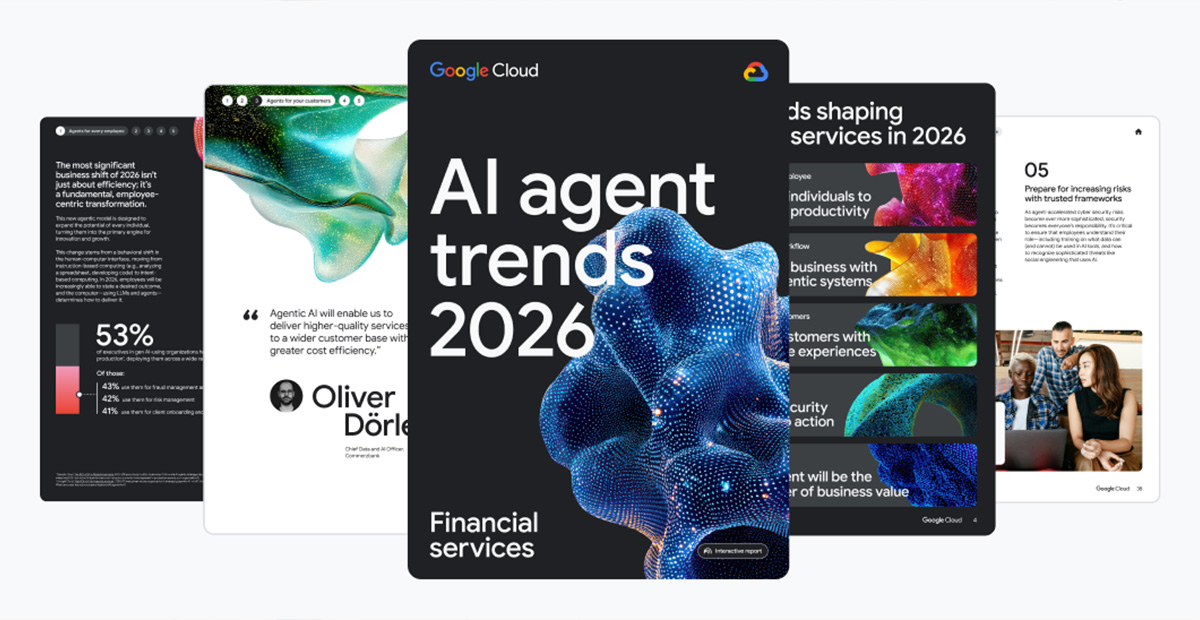
According to Google Cloud’s latest research, 53% of FSI executives already have AI agents in production. Besides boosting efficiency, the agentic model is designed to expand the potential of every individual (employee centric transformation). This also represents a behavioral shift in the human-computer interface, moving from instruction-based to intent based computing.
Here are the five key trends shaping the future of finance
1. Agents for Every Employee: From “Search” to “Solve”
Employees will no longer spend hours on manual data gathering; instead, they will state a desired outcome, and their “team” of agents will deliver it. As such, every employee becomes a “human supervisor” or orchestrator of agents.
2. Agents for Every Workflow: The Digital Assembly Line
Financial institutions are moving beyond individual productivity to end-to-end process automation. For example, agents can now initiate secure, authorized payments on behalf of humans, paving the way for agentic commerce.
3. Agents for Your Customers: The Rise of the Concierge
Reasoning AI agents will act as proactive concierges, understanding intent and context. Instead of waiting for a complaint, an agentic concierge can monitor systems to detect potential “attrition” with customers.
4. Agents for Security: From Alerts to Action
Agentic SOCs orchestrate task-based agents to handle investigation, and malware analysis autonomously. As a consequence, Agents allow humans to shift from “alert-watching” to strategic threats.
5. Agents for Scale: Upskilling as a Driver of Value
The “half-life” of a skill is now just four years. It follows that organizations must stimulate an “AI-ready” workforce by securing sponsorship and rewarding innovation.
The competitive advantage in financial services in 2026 will belong to those who view AI agents not as technical replacements, but as human augmentations. By freeing teams from repetitive, low-value work, FSI leaders can finally allow their teams to focus on the creative, strategic, and empathetic work that only humans can do.